
Uncategorized
Janusz Casino – Card Counting Strategy and Fair Play
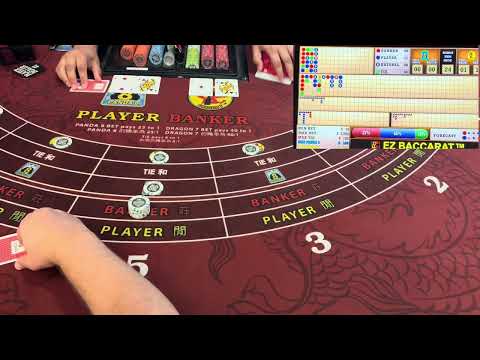
Counting cards gets painted as an ultimate chess match between a player and the house, an ability that may shift blackjack toward the gambler. The actuality of contemporary online gambling sites, and a platform like click to learn more specifically, is far messier than that. The phrase “card counting” brings to mind of land-based casino floors, deck depth and quiet stake adjustments, but once the felt is swapped by a virtual interface or a broadcast dealer game, the complete dynamic transforms. Janusz Casino has established its reputation on clarity, licensing and a commitment to honest gaming that provides no scope for abuse. The following piece unpacks what card counting really entails today, examines whether it carries any usable advantage at Janusz Casino, and details the numerous tiers of integrity, from random number generator audits and supervision of live dealers to equitable bonuses and responsible play instruments, that shield UK players. By the end, users will realize not merely why card counting is irrelevant here, but also how the complete system of the site is structured to deliver a truthful, entertaining experience free from undisclosed hazards.
Comprehending Card Counting in Today’s Gambling
At its core, card counting is a mathematical strategy used in blackjack to monitor the ratio of high to low cards remaining in the shoe. The most common system, Hi-Lo, gives a value of +1 to low cards (2–6), 0 to neutral cards (7–9) and –1 to high cards (tens, face cards and aces). As cards are played, the player keeps a running count and turns it into a true count by separating by the estimated number of decks still to be played. When the true count is positive, a larger proportion of high cards remains, which helps the player by raising the likelihood of blackjacks and effective double-down bets. Under optimal land-based conditions, single or double-deck games played deeply into the shoe with player-friendly rules, a seasoned counter can reverse the house edge to a theoretical advantage of about 1-2%. This edge is realised through bet spreading, where the player increases wagers when the count is favourable and reduces them when it is not, all while implementing optimal basic strategy deviations.
Modern gambling has shifted far beyond the traditional single-deck scenario, though. Land-based casinos, and especially their online counterparts, employ a range of countermeasures that eliminate counting almost entirely. Continuous shuffling machines (CSMs), early reshuffles, limited penetration and side-bet exclusions all undermine the assumptions on which counting relies. In an online setting, the difference between a computer-generated RNG game and a live dealer stream becomes critical. Digital blackjack reshuffles a virtual deck before every hand, destroying any concept of a running count. Live dealer tables, while real, are usually equipped with CSMs that recycle cards after each round, ensuring a perpetually fresh shoe. Even on the rare shoe-dealt live table, operators cap penetration to as little as 50%, forcing the true count needed for an edge beyond practical reach. Janusz Casino operates directly within this modern framework, where card counting is mostly a historical talking point than a viable advantage play technique.
The Reliability of Live Dealer Games
Dealer Protocols and Shoe Handling
When a player joins a live dealer blackjack session at Janusz Casino, they are witnessing a tightly choreographed operation regulated by standard operating procedures that rival those of a premium land-based casino. The cards are usually pre-shuffled by an automated shuffling machine that mixes them beyond human capability, then put into a shoe or a continuous shuffler. In the overwhelming majority of tables, the continuous shuffler returns used cards straight back in after each round, implying the deck composition never develops a bias. Where a traditional shoe is used, the dealer inserts a cut card at a predetermined point, often after roughly half the decks have been dealt. Once the cut card shows up, the round is finished and a complete shuffle is executed, resetting all counting efforts. Multi-angle high-definition cameras capture every moment, and optical character recognition software confirms each card’s value in real time, generating a digital log that can be compared against the video feed.
The physical cards are consistently inspected for marks and replaced well before any wear could introduce predictability. Dealers follow a fixed sequence of movements that cuts handling time and reduces the risk of accidental exposure. On top of this, a pit boss or studio manager monitors tables continuously, and any deviation from protocol, such as a dealer misdealing or a card being dropped, is handled with a pause and a clear resolution. This rigorous oversight ensures that even if a player tried to count, the deck conditions would never permit a sustainable edge. Janusz Casino’s live dealer product, delivered through established studio partnerships, inherits all these integrity measures, giving UK players the same reassurance they would feel on a busy casino floor without leaving home.
Legal Oversight of Live Studios
The live dealer studios that power Janusz Casino are not run in a regulatory vacuum. They are licensed by trusted gambling authorities, frequently the same regulators that oversee the online platform itself, or by specialized physical-site regulators in the jurisdiction where the studio is physically located. These bodies sanction every aspect of the operation, from the shuffling algorithms used in the automatic shufflers to the particular game regulations displayed on screen. Inspectors may show up unannounced to check that equipment has not been tampered with and that staff are complying with published procedures. The streaming infrastructure itself is protected by encryption, making it practically impossible for a third party to alter the video feed or the data it carries.
Each game round generates a time stamped entry that is tamper-proof and saved on the provider’s server. If a player ever questions the outcome of a hand, the operator can pull up the full audiovisual recording and the digital log, supplying an objective audit trail that clarifies any ambiguity. This level of transparency matches perfectly with Janusz Casino’s broader fair play commitments. In combination with the technical safeguards inside the live room, regulatory oversight closes any remaining gap that might theoretically be taken advantage of, whether through card counting, collusion or equipment manipulation. For the end user, it signifies that every live blackjack hand is conducted under a standard of scrutiny that completely eliminates the relevance of old-school advantage play.
Is Card Counting Possible at Janusz Casino?
Live Blackjack with Dealers at Janusz Casino
The live dealer blackjack tables accessible through Janusz Casino are run by leading studio providers, and they are configured to deliver a transparent, social experience while removing any realistic counting opportunity. The overwhelming majority of these tables use continuous shuffling machines, where the dealer feeds used cards straight back into the shuffler after every hand. Because the running count returns to zero immediately, a player cannot develop the positive counts needed to secure an edge. In the few instances where a traditional shoe is employed, the cut card is placed far forward, typically ensuring that only 50–60% of the cards are dealt before a reshuffle. This shallow penetration holds the true count within a narrow band that rarely, if ever, provides a profitable betting opportunity.
Apart from the physical equipment, the platform’s risk management systems proactively monitor betting patterns. Any player who suddenly varies their stake size in a way that mirrors a counting strategy is likely to be flagged for review. Janusz Casino’s terms and conditions expressly state that advantage play, including card tracking and counting, is not permitted, and accounts suspected of such behaviour can face wagering limits or closure. This is not about punishing skill but about preserving the game as a form of entertainment where the house edge remains constant and transparent for every participant. Given the combination of CSMs, limited penetration and active policy enforcement, a UK player visiting Janusz Casino can be assured that the idea of card counting at these live tables is purely theoretical, with no path to sustainable profit.
RNG Blackjack: The Part of Randomness
Digital blackjack at Janusz Casino functions on a certified random number generator that shuffles a virtual deck for each new hand. There is no discard pile, no record of past outcomes and no penetration spot that could be exploited. From a statistical standpoint, every hand is an separate occurrence; the probability of any specific card appearing stays constant and uninfluenced by the order of previous hands. Even when a player could remember every card that occurred in a session, an unattainable challenge given the speed of digital play, that information would offer zero forecasting value for the next hand. The house edge on RNG blackjack, which commonly sits at around 0.5–0.7% with ideal basic strategy, is built into the game’s rules and can’t be overcome by counting.
Many players enjoy RNG blackjack precisely because it removes the mental load associated with live tables. The interface is clean, the rounds are fast, and side bets such as Perfect Pairs and 21+3 add variety without complicating the underlying fairness. Janusz Casino’s platform ensures that the RNG algorithm is supplied by a regulated game developer and subjected to regular audits by independent testing laboratories. These labs check for statistical randomness, unpredictability and consistency with the published return-to-player percentage. Consequently, the blackjack experience remains squarely in the realm of chance, where smart money management and basic strategy matter, and card counting is an irrelevant relic.
Rewards, Wagering Requirements and Transparent Terms
Introductory Bonus Structure
Janusz Casino usually provides new players with a welcome package that includes a deposit match and a package of free spins on selected slots. The precise percentage match, maximum bonus amount and number of free spins fluctuate with the promotional calendar, so players are advised to consult the live promotions page before signing up. A standard structure might entail a 100% match on the first deposit up to a certain value, with smaller matches on the second and third deposits, and the free spins distributed over the first few days. This bonus is always optional; a player can refuse the offer and play with their own deposit, in which case no wagering requirements complicate the withdrawal process. That opt-in choice is a key indicator of fair terms, because it puts control directly in the player’s hands.
Lacking a mandatory, non-negotiable bonus ensures that players who favor simplicity can dive directly into the action unburdened by playthrough obligations. For those who take the welcome package, the bonus funds are placed in a separate balance from the cash deposit, and the casino’s software clearly displays how much is still required to wager before the bonus converts to withdrawable cash. This transparent separation of funds enables players to follow their progress and avoids the confusion that can arise when bonus and cash balances are intertwined. As with all credible UK-facing platforms, Janusz Casino’s approach to bonuses is aimed at attracting genuine players rather than to ensnare them with unattainable conditions, and the full terms lie just a single click away from the offer button.
Understanding Wagering and Game Weighting
The wagering requirement is the condition that a player must meet before bonus money and any winnings obtained from free spins may be cashed out. At Janusz Casino, this requirement is presented as a multiplier, commonly 35x to 40x the bonus amount, or at times the bonus plus the deposit amount, and the figure is plainly outlined in the promotional terms. Not all games weigh equally towards fulfilling the requirement. Slots always contribute 100%, meaning every £1 wagered on a slot removes £1 off the playthrough target. Table games, video poker and live casino titles, though, are granted reduced or zero weightings because their lower house edge provides players a better theoretical chance of meeting the conditions. The following list demonstrates typical game weightings a player may come across when reviewing a Janusz Casino bonus:
- Slot games (excluding progressive jackpot titles): 100% contribution
- Traditional Blackjack and Roulette: 10–20% count
- Live dealer games: 10% weighting
- Video poker machines: 5–10% count
- Baccarat games, Caribbean Stud and comparable games: 0% (commonly excluded)
Aside from weighting, players should also verify the maximum bet limit set while a bonus is active, typically £5 per spin or hand, and the completion window, which usually sits at 30 days. Exceeding the bet limit or neglecting to complete the wagering within the time frame leads to the forfeiture of the bonus and related winnings. These rules are in place to prevent bonus abuse and to preserve the economic viability of generous promotions, not to mislead honest players. Janusz Casino’s clear presentation of these details gives every customer the opportunity to make an informed decision, which is the essence of fair bonus practice.
Fair Gaming and Random Number Generators
Third-Party Auditing and Verification
One of the most robust guarantees of fair play at Janusz Casino is the periodic auditing of its game library by third-party, accredited testing houses. Organizations such as eCOGRA, iTech Labs or Gaming Laboratories International (GLI) perform rigorous evaluations that model millions of game rounds, evaluating whether the outcomes correspond to the statistical profiles provided by the software providers. These audits confirm that the random number generator delivers genuinely unpredictable results and that the actual payout percentages match with the theoretical RTP values displayed. Once a game passes scrutiny, the auditor grants a certificate that verifies the game’s fairness. At Janusz Casino, such certifications are commonly available via a clickable badge in the site footer or within the in-game help menu, permitting any player to confirm the credentials independently.
The verification process also analyzes the RNG’s base algorithm and its seed source, the initial value that triggers the number sequence. A weak seed or deterministic algorithm could in principle allow a player to predict outcomes, but modern iGaming software uses cryptographically secure seeds obtained from hard-to-guess sources like atmospheric noise or system entropy. Regular re-certification after game updates or configuration changes indicates the audit is not a one-off event but an ongoing cycle. This continuous oversight is a foundation of consumer confidence; it means neither the casino nor the game developer can tamper with results once the product is live. For UK audiences familiar with high regulatory standards, the existence of such independent testing is a key indicator that Janusz Casino takes fairness seriously and does not rely on mere marketing claims.
How RNG Works in Slot Games and Tabletop Games
At the core of every online slot, roulette wheel or blackjack hand on the Janusz Casino platform sits a random number generator developed around a pseudo-random algorithm. The system initiates with a seed number drawn from an random physical source, then runs through a complex mathematical function that outputs an infinite stream of ostensibly random values. Each value is linked to a game outcome: the stopping position of a reel strip, the number on a roulette pocket or the order of cards in a virtual deck. Because the algorithm is engineered to pass statistical tests such as the Diehard or NIST suites, the sequence is effectively indistinguishable from true randomness over the billions of cycles a typical game undergoes across its player base.
Critically, the RNG output is never directly accessible to the casino operator. The game server receives only specified outcome commands, not raw numbers that could be manipulated. This separation ensures that no external agent can impact whether a spin wins or loses. Players sometimes observe hot and cold streaks, but these are purely psychological; the independent nature of each trial means that past spins have no influence on future ones. The result is an environment where card counting in table games is impossible, and where every slot payout depends exclusively on the probability table set by the developer. Janusz Casino’s transparent display of RTP figures, often found within the game rules or the provider’s paytable page, lets players grasp the mathematical framework before they wager, reinforcing a culture of informed, fair gaming.
Banking Methods, Security and Safe Play
Funding and Cashing Out: Fast and Secure
Janusz Casino provides a wide range of payment options suitable for UK players. The cashier handles major debit cards such as Visa and Mastercard, popular e-wallets including PayPal, Skrill and Neteller, prepaid solutions like Paysafecard, and direct bank transfers. Deposits are handled instantly, allowing members to top up their accounts and get into the game lobbies without delays. All financial transactions are protected by SSL encryption using at least 128-bit technology, guaranteeing that personal information and payment details are never transmitted as plain text. Before a first withdrawal, the player must go through a KYC verification process, submitting proof of identity, address and sometimes the payment method used. This is a common anti-money laundering requirement imposed by the casino’s licensing jurisdiction and is not a delaying tactic.
Once verified, withdrawal times depend on the chosen method. E-wallet payouts are typically processed within 24 hours of the request being approved, whereas debit card and bank transfer withdrawals can take between 3 and 5 business days. The casino does not generally impose fees on transactions, though a player’s own banking provider might. Minimum and maximum limits per transaction are clearly displayed in the cashier section, and the internal limit system can be customised through responsible gambling tools. A quick, glitch-free payout process is a central component of fair play because it demonstrates that the operator honours its obligations and respects the player’s time and money. Janusz Casino’s infrastructure is built to meet this expectation, with a dedicated payments team monitoring requests so that delays are rare and communicated when they occur.
Commitment to Safer Gambling
Fair play at Janusz Casino goes beyond game fairness and financial reliability into the realm of player protection. The platform’s responsible gambling hub provides users with a comprehensive set of tools that can be triggered from the account dashboard. Players can establish daily, weekly or monthly deposit caps, configure reality-check alerts that show up after a chosen interval to remind them how long they have been playing, and initiate cooling-off periods from 24 hours up to six weeks. For those who want a longer break, full self-exclusion options are accessible, blocking access to the account for a fixed term or permanently. The site also integrates with GAMSTOP, the UK’s national online self-exclusion service, allowing a single action to spread exclusion to all participating operators.
Behind the scenes, Janusz Casino’s licensing framework demands the operator to track player activity for markers of harmful gambling behaviour. Customer service staff receive training to identify risk markers and to steer affected players toward appropriate support. Links to independent organisations, including GamCare, BeGambleAware and the National Gambling Helpline, are located prominently on the responsible gambling page and in the site footer. This entire safety apparatus transforms fair play from a narrow technical concept into a broader duty of care. UK visitors can therefore trust that the brand does not just enforce game fairness, but also works actively to keep the entertainment safe, sustainable and free from the hidden harm that undermines fragile players.
Common Questions About Fairness at Janusz Casino
Is there a way to card count effectively at Janusz Casino?
Absolutely not. The live dealer blackjack tables present at Janusz Casino utilize continuous shuffling machines that put back used cards to the shoe after every round, ensuring the running count start over immediately. Even if a shoe-dealt table is sometimes offered, the operator restricts penetration by reshuffling once the cut card shows up, typically after merely 50–60% of the deck has been played. This restricted penetration blocks counters from attaining a true count sufficiently high to generate a meaningful edge. On the virtual RNG blackjack side, each hand is dealt from a electronically shuffled deck with no memory of previous outcomes, so past cards provide no predictive value. Janusz Casino’s usage terms define card counting as an edge play technique that is not permitted. The platform’s monitoring systems track betting patterns, and attempted counting would likely lead to wagering restrictions or account closure. The notion of gaining an edge through counting is practically impossible, and the games stay a honest leisure pursuit for all patrons.
By what means are the games tested for fairness?
All titles on the Janusz Casino platform come from licensed software providers with RNGs undergo independent testing and certified for fairness by accredited laboratories like eCOGRA, iTech Labs or GLI. These bodies run millions of simulated game rounds to verify that the outcomes are statistically random and that the actual return to player (RTP) matches the theoretical RTP listed for each title. The certification is regularly updated, and certificates are typically accessible via a clickable logo in the casino’s footer or within the game’s information panel. Live dealer games, on the other hand, are based on physical equipment and human dealers supervised in regulated studios. The integrity of those tables is maintained through multi-camera monitoring, card inspection and encrypted streaming that prevents tampering. Players can therefore trust that every spin, hand or roll at Janusz Casino is a genuinely chance-based event, audited by external authorities who have no financial stake in the outcome.
What must a player verify before accepting a bonus?
Before taking any bonus at Janusz Casino, a player should check the full promotional terms linked right beside the offer. The most critical elements are the wagering requirement, usually shown as a multiplier of the bonus amount or the bonus plus deposit, and the list of games that apply toward meeting that requirement. Slots normally contribute 100%, but table games, live casino titles and video poker often count only 10% or even less, and certain high-RTP blackjack variants may be removed entirely. Players should also check the maximum bet allowed while a bonus is active; exceeding this limit can invalidate both the bonus and any winnings obtained from it. The time allowed to complete wagering, commonly 30 days, is equally important, as unfulfilled requirements result in the removal of bonus funds. Check whether the welcome package includes free spins and whether any winnings from those spins are capped. By carefully reviewing these details, a player can make an informed decision and avoid surprises, which is exactly what fair bonus conditions should support.
How soon can I withdraw my winnings?
Withdrawal speed at Janusz Casino is determined by the payment method picked and the account verification status. After a player finishes the initial KYC check, providing proof of identity, address and payment method, e-wallet withdrawals including those via Skrill, Neteller or PayPal are usually processed within 24 hours of the request. Debit card and bank transfer withdrawals generally take longer, with a window of 3 to 5 business days once approved. The casino’s finance team aims to process payout requests promptly, often within a few hours for e-wallets, but the exact timeline can differ during weekends or public holidays. Pending periods, where a withdrawal can be cancelled, are typically brief. Players should keep in mind that large wins may initiate additional verification to comply with anti-money laundering regulations, which can marginally extend the timeline. The cashier page presents all available methods along with estimated processing times and any limits per transaction, so always refer to that resource before requesting a payout.
